I Have a Dream That No Family Has to Beg After Burying a Loved One


The Most Powerful Form of Protest Is Not a March.
It Is a Plan.
There is a sound that has become far too familiar in America.
A mother crying in a hospital hallway.
A pastor standing behind a pulpit too soon.
A police officer knocking on a door after midnight.
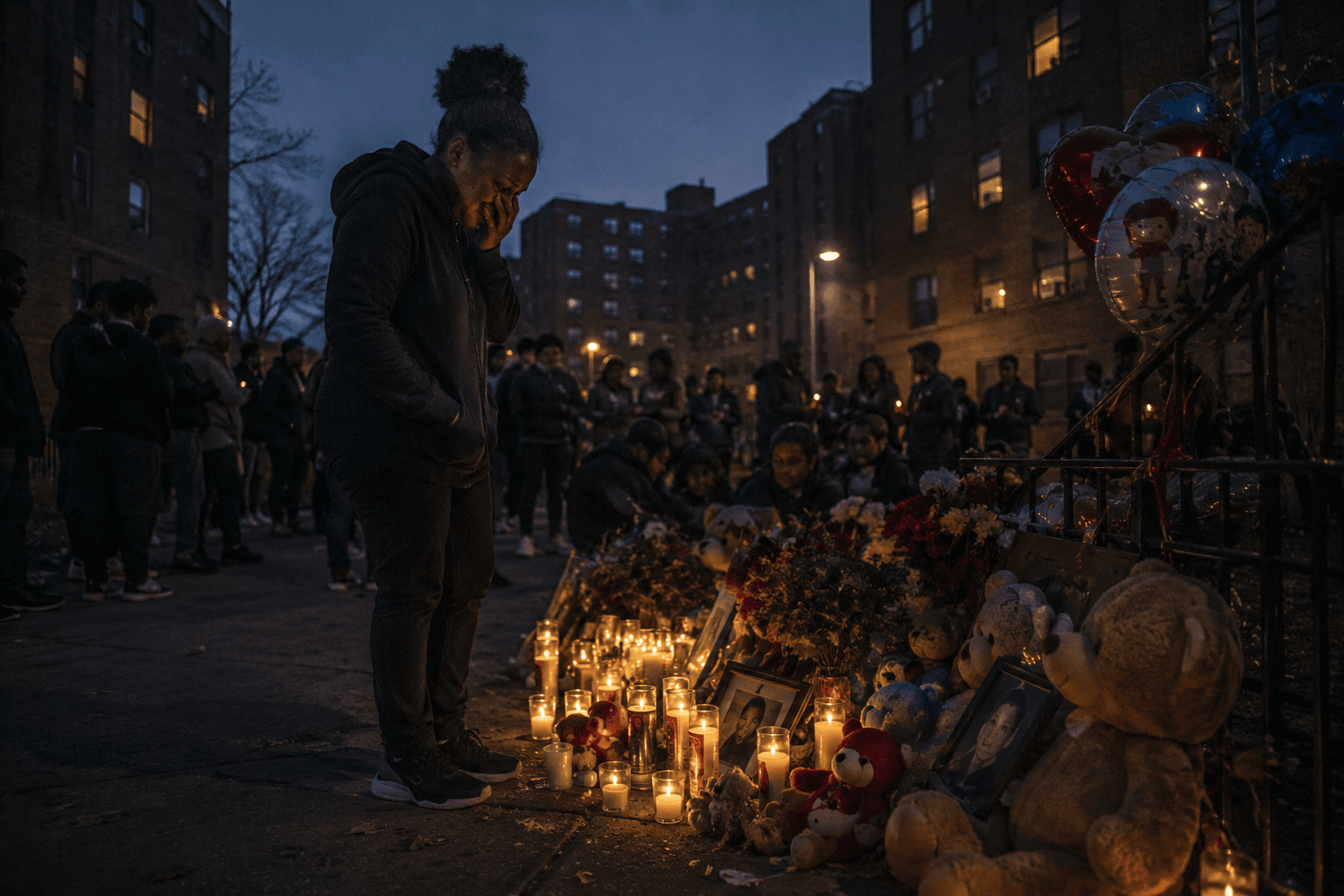
A candlelight vigil on a street corner.
A GoFundMe page shared across social media.
A family desperately trying to figure out how they will bury someone they love.
We have become so accustomed to these moments that many of us no longer stop to ask a simple question.
Why?
Why, in the richest nation in human history, are families still selling dinners, organizing fundraisers, passing collection plates, and asking strangers online for help after tragedy strikes?
Why has financial panic become a normal part of grief?
Why have entire communities become experts at raising money after funerals but rarely receive education on how to build protection before one?
Enough is enough.
Because a family's worst day should not also become its most financially vulnerable day.
This is not an article about life insurance.
This is an article about power.
It is about dignity.
It is about ownership.
It is about whether a child born in public housing deserves the same level of financial protection as a child born in a gated community.
It is about whether working families deserve access to the same wealth-preservation strategies that affluent families have quietly used for generations.
And it is about a simple idea that could change the future of countless communities:
Every child deserves financial protection from the day they are born.
The Wealth Gap Nobody Sees
When politicians talk about poverty, they talk about jobs.
When economists talk about inequality, they talk about wages.
When communities talk about opportunity, they talk about education.
All of those conversations matter.
But there is another conversation almost nobody is having.
Protection.
Because wealth is not simply what you earn.
Wealth is what survives disruption.
A family can spend thirty years building stability.
One unexpected event can erase it.
Unless a system exists to protect it.
The wealthy have understood this for generations.
They insure businesses.
They insure homes.
They insure investments.
They insure income.
They insure estates.
They insure legacies.
Because they understand something many working families were never taught.
Building wealth is only half the game.
Protecting wealth is the other half.
The Largest Wealth Transfer Most Americans Never Notice
According to the American Council of Life Insurers, life insurance companies paid approximately $88.5 billion in death benefits during 2024 alone.
Read that number again.
Eighty-eight billion dollars.
That is roughly:
$242 million every day
More than $10 million every hour
Nearly $170,000 every minute
Every minute of every day, somewhere in America, a family receives financial support because someone planned ahead.
Someone made a decision years earlier that said:
"If something happens to me, my family will not be left alone financially."
That is not merely insurance.
That is economic protection.
That is wealth preservation.
That is financial resilience in action.
Yet industry research estimates nearly 100 million Americans remain uninsured or underinsured.
One hundred million people.
One hundred million families.
One hundred million futures exposed to unnecessary risk.
The Question That Changed Everything
Imagine two children.
One is born in Beverly Hills.
The other is born in public housing.
Both are loved.
Both are intelligent.
Both are full of potential.
Both have dreams.
Yet one child enters a world where financial planning, protection, and wealth preservation are considered normal.
The other enters a world where survival often takes priority over planning.
Not because their parents love them differently.
Not because one child is more valuable.
But because knowledge has never been distributed equally.
The issue has never been human worth.
The issue has been access.
Access to information.
Access to strategy.
Access to protection.
Why This Matters in Communities Facing Violence
Every community understands loss.
But some communities experience more of it.
Every time a young life is lost, the headlines focus on what happened.
The media covers the tragedy.
The community gathers.
People mourn.
Then the cameras leave.
But the family remains.
The rent remains.
The mortgage remains.
The bills remain.
The future remains uncertain.
And often the community begins doing what it has done for generations.
Raising money.
Holding fundraisers.
Collecting donations.
Helping however it can.
That generosity is beautiful.
But imagine if the conversation started years earlier.
Imagine if protection was already in place.
Imagine if a family could focus entirely on healing because the financial foundation had already been built.
Imagine if tragedy did not automatically create financial instability.
The goal is not to profit from pain.
The goal is to prevent pain from becoming poverty.
The $40 Trillion Wake-Up Call
Swiss Re, one of the world's largest reinsurance companies, estimates the global mortality protection gap exceeds $40 trillion.
Not million.
Not billion.
Trillion.
That figure represents the amount of financial protection families around the world would need to maintain their standard of living if a primary income earner died unexpectedly.
Forty trillion dollars.
One of the largest unaddressed financial vulnerabilities in human history.
And behind that number are real people.
Real children.
Real families.
Real futures.
The protection gap is not an insurance problem.
It is a human problem.
What Experts Have Been Trying to Tell Us
Nobel Prize-winning economist Amartya Sen argued that poverty is not merely a lack of income.
It is a lack of capability.
A lack of choices.
A lack of options.
What happens when a family loses a provider and suddenly has no options?
What happens when grief is immediately followed by financial crisis?
The issue is not simply money.
The issue is resilience.
Financial educator and author Robert Kiyosaki often reminds audiences that financial education is one of the most overlooked subjects in modern society.
Warren Buffett famously said:
"Risk comes from not knowing what you're doing."
Perhaps one of the greatest risks facing working families today is not the absence of opportunity.
It is the absence of information.
Because people cannot act on knowledge they were never given.
The Good Wealth Vision
This is why Good Wealth exists.
Not to sell fear.
Not to exploit tragedy.
Not to make promises.
Good Wealth exists because too many families have been left outside conversations that should belong to everyone.
We believe financial protection should be understood as clearly as reading and writing.
We believe every parent should understand how protection works.
We believe every family should understand the difference between temporary coverage and permanent coverage.
We believe every household should understand how certain life insurance policies may build cash value over time.
We believe families should understand how protection, ownership, savings, and long-term planning can work together.
Most importantly, we believe financial knowledge should not be reserved for the wealthy.
It should belong to everyone.
A New Dream for America
Imagine an America where every newborn leaves the hospital with a financial protection plan.
Imagine churches teaching protection alongside stewardship.
Imagine schools teaching financial resilience alongside mathematics.
Imagine community centers teaching wealth preservation alongside job readiness.
Imagine parents discussing protection as naturally as they discuss education.
Imagine children growing up knowing that preparation is normal.
That planning is normal.
That protecting the future is normal.
Imagine entire neighborhoods becoming financially resilient.
Not because they became wealthy overnight.
Because they became educated.
Because they became intentional.
Because they decided enough was enough.
The Real Revolution
The real revolution is not waiting for someone else to save us.
The real revolution is preparation.
The real revolution is learning the rules of the financial game and teaching them to the next generation.
The real revolution is understanding that protection is not just for wealthy families.
The real revolution is refusing to allow a zip code to determine a destiny.
The real revolution is making sure every child begins life with more than hope.
With a plan.
With protection.
With possibility.
Because wealth is not only what you build.
It is what you protect.
And perhaps one of the greatest acts of love a parent can make is not simply believing in a child's future.
It is building a system that helps that future survive.
The Call
If you have children, start the conversation.
If you have grandchildren, start the conversation.
If you lead a church, start the conversation.
If you coach young people, start the conversation.
If you own a business, start the conversation.
If you care about your community, start the conversation.
Learn.
Ask questions.
Understand your options.
Build a plan.
Protect your future.
Then teach someone else.
Because movements do not begin when people agree.
Movements begin when people become informed.
And if enough families decide that financial protection matters, the ripple effects will extend far beyond individual households.
They will reshape communities.
They will reshape opportunities.
They will reshape futures.
Enough Is Enough
Enough funerals followed by financial panic.
Enough families starting over from zero.
Enough children inheriting instability.
Enough confusion around systems that should be understood by everyone.
Enough believing protection is only for the wealthy.
Enough accepting vulnerability as normal.
Enough waiting.
A child born in the projects is worth just as much as a child born in a mansion.
A family's future is worth protecting regardless of its income.
A community's dreams deserve structure.
Its hopes deserve strategy.
Its children deserve preparation.
And its future deserves defending.
The question is no longer whether the tools exist.
The question is whether we are finally ready to use them.
Because the strongest communities are not the communities that never face tragedy.
They are the communities that prepare for it before it arrives.
And that begins with a decision.
Today.
Not tomorrow.
Today.
The Good Wealth Manifesto
The Good Blog Special Edition
Making uncommon knowledge common.