Boolean


Most people have heard the same résumé advice for years:
Use the right keywords.
That's useful advice.
But it's incomplete.
Because keywords tell a search system what to look for.
Boolean tells the system how those words should relate to one another.
And that distinction can change how you think about your résumé, LinkedIn profile, and professional vocabulary.
The strange part?
The idea behind it predates LinkedIn, Amazon, computers, and even the modern résumé.
It begins with a mathematician born in 1815.
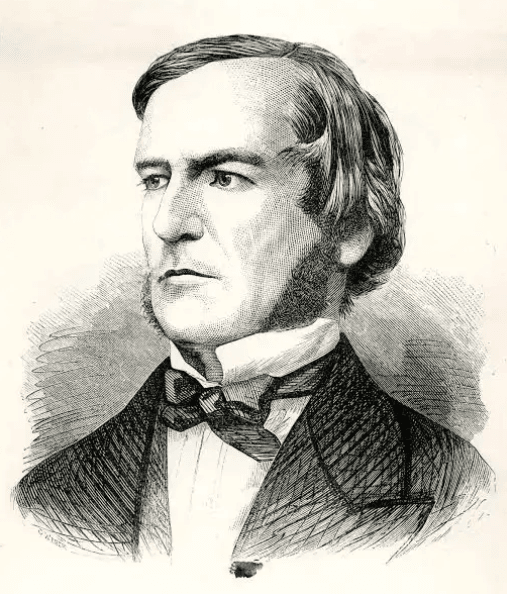
Before Computers, There Was George Boole
George Boole was an English mathematician interested in an enormous question:
Could human logic be expressed mathematically?
In 1847, Boole published The Mathematical Analysis of Logic. He expanded those ideas in his 1854 work An Investigation of the Laws of Thought.
His work helped establish what became known as Boolean algebra: a system for representing logical relationships mathematically.
The implications became much larger than Boole could have witnessed during his lifetime.
Later developments connected Boolean logic to switching circuits and digital computing.
Eventually, computers would process enormous amounts of information through logical operations.
And today, descendants of that same basic idea appear somewhere Boole certainly never imagined:
Recruiting.
AND. OR. NOT.
You don't need a computer-science degree to understand the career implication.
Imagine a recruiter wants someone with partner-marketing experience.
A keyword search might involve:
Partner Marketing
Boolean allows relationships between search terms.
For example:
Partner Marketing AND AWS
means the search requires both concepts.
Partner Marketing OR Channel Marketing
broadens the search by allowing either.
Marketing NOT Intern
excludes results matching the unwanted term.
Parentheses and quotation marks can make searches considerably more sophisticated.
LinkedIn Recruiter explicitly supports Boolean modifiers and maps its search logic to Must have (AND), Can have (OR), and Doesn't have (NOT) across multiple recruiting filters.
So here's the simplest way to remember it:
Keywords determine WHAT gets searched.
Boolean determines HOW those terms can be combined.
That difference matters.
Why Didn't Anyone Teach Us This?
This is where I think our education about careers has a gap.
We teach people how to write résumés.
We teach interviewing.
We teach networking.
We tell people to dress professionally.
We tell them to use action verbs.
More recently, we've started telling them to use keywords.
But relatively few workers are ever taught to think from the opposite side of the database:
How might someone search for me?
That's an entirely different question.
Boolean itself isn't secret.
It is openly documented.
Computer scientists know it.
Researchers and librarians use Boolean search principles.
Recruiters and professional sourcers learn it.
LinkedIn publishes instructions explaining how recruiters can use it.
The information is available.
The problem is that the candidate is generally taught to think like an applicant, not like a searcher.
That's the information gap.
And AI gives ordinary workers an opportunity to close it.
Let's Apply This to an Actual Executive Job
Consider Amazon Web Services' Director, Global Partner Marketing position.
The role isn't simply looking for a person who has been a “Marketing Director.”
AWS describes an executive who can operate across several overlapping domains:
Global partner marketing.
High-tech B2B marketing.
Partner demand generation.
Channel ecosystems.
Joint go-to-market.
Account-Based Marketing.
Global teams.
Pipeline and lead generation.
Executive stakeholder management.
Cloud technology.
AI proficiency.
Market analysis.
Partner programs.
Now imagine two candidates.
Both may be highly qualified.
Candidate A describes herself primarily as:
“Senior marketing executive with 18 years of experience building strategic relationships and growing global revenue.”
That sounds impressive to a human.
Candidate B may describe comparable real experience using terminology such as:
Global Partner Marketing
Channel Marketing
Partner Ecosystems
B2B Technology Marketing
Account-Based Marketing
Demand Generation
Joint Go-to-Market
Pipeline Generation
Cloud Technology
Executive Stakeholder Management
Candidate B hasn't necessarily accomplished anything Candidate A hasn't.
But Candidate B has created more accurate vocabulary pathways through which that experience can potentially be discovered.
That's the lesson.
Not keyword stuffing.
Not lying.
Not gaming Amazon.
Translation.
Build the Search From the Recruiter's Side
Let's pretend we were sourcing candidates for this AWS position.
We could start with a hypothetical Boolean string such as:
("partner marketing" OR "channel marketing" OR "alliance marketing") AND ("demand generation" OR ABM OR "account-based marketing") AND ("cloud" OR AWS OR "cloud computing")
That's only an illustration. We do not know the actual search string an Amazon recruiter would use, and modern recruiting platforms provide additional filters, recommendations, and AI-assisted search beyond Boolean.
But look at what just happened.
We stopped reading the job description as prose.
We started reading it as searchable concepts.
Now we can go deeper.
The role calls for significant experience in high-tech B2B marketing.
That could produce another conceptual family:
("B2B marketing" OR "technology marketing" OR "enterprise marketing")
It wants expertise involving partners:
("partner marketing" OR "channel marketing" OR "alliance marketing" OR "ecosystem marketing")
It wants demand generation:
("demand generation" OR "pipeline generation" OR "lead generation")
And it requires executive leadership:
(Director OR "Marketing Director" OR VP OR "Vice President")
Again, these are illustrative search constructions, not Amazon's proprietary recruiting criteria.
That's important.
We're learning how to think like the searcher, not pretending we know Amazon's internal hiring algorithm.
Now Flip the Search Back Onto Yourself
This is where AI becomes incredibly useful.
Take the AWS job description.
Take your résumé.
Remove personal information you don't want to share with an AI service.
Then ask:
“Analyze this job description as a professional talent sourcer. Identify the major titles, skills, tools, functions, and industry concepts a recruiter could use in a Boolean candidate search. Generate legitimate industry synonyms for each concept. Compare those terms with my résumé. Identify terminology that accurately describes experience I genuinely have but that my résumé currently describes differently or doesn't explicitly name. Do not invent qualifications, skills, employers, achievements, or experience.”
Now you've turned AI into a translation layer.
Suppose your résumé says:
“Built customized campaigns targeting strategic enterprise accounts.”
The AWS description uses:
Account-Based Marketing.
If what you actually did meets the meaning of ABM, that's potentially useful terminology.
Or maybe your résumé says:
“Developed joint campaigns with technology partners.”
The market may describe that experience using terms such as:
Partner Marketing.
Channel Marketing.
Co-Marketing.
Joint Go-to-Market.
The question isn't:
“Which words can I sneak into my résumé?”
It's:
“Which professional terms accurately describe work I've already done?”
That is an enormous distinction.
Why I Wouldn't Build a Giant “Taxonomy Payload”
There's an increasingly popular idea online that candidates should dump enormous synonym lists onto the bottom of a résumé to overwhelm an ATS.
I wouldn't recommend that.
LinkedIn's own guidance actually warns that overly complicated Boolean queries can create search-result problems and recommends using appropriate structured filters when searches become too complex.
More importantly, your résumé ultimately has another audience:
A human being.
The objective isn't maximum keyword density.
It's maximum accurate discoverability without sacrificing clarity.
If you genuinely have ABM experience, say ABM where appropriate.
If you genuinely worked with channel partners, use recognized channel terminology.
If you worked in cloud technology, make that clear.
But don't add AWS because the job says AWS if you've never worked with AWS.
Don't turn “used Excel” into “advanced financial modeling” because AI suggested it.
And don't transform exposure into expertise.
AI should expand your vocabulary, not your résumé's truth.
The Bigger Lesson Isn't Really About Résumés
Boolean reveals something much larger about modern life.
We increasingly interact with systems from only one side.
We submit the application.
Someone else searches the database.
We submit the insurance claim.
Someone else processes it.
We receive the credit report.
Someone else furnished the data.
We receive the medical bill.
Someone else understands the coding.
We receive the tax notice.
Someone else understands the procedure.
And historically, the person who understood how the system operated held an enormous information advantage over the person simply participating in it.
AI is beginning to change that.
Not because AI magically beats systems.
Because ordinary people can increasingly ask:
“Explain how the other side of this process works.”
That's an extraordinarily powerful question.
George Boole wasn't trying to help somebody get hired by Amazon when he began formalizing logic in the nineteenth century.
But almost two centuries later, his name lives inside a search methodology that can help determine which pieces of information are returned from enormous databases.
You don't need to become a mathematician.
You don't need to become a recruiter.
You don't need to manipulate an algorithm.
You just need to become curious enough to ask:
How does the system searching for me actually search?
Because keywords tell the system what to find.
Boolean tells it how to search.
And once you understand both sides of the equation, you stop being merely the person being searched.
You become someone who understands the search.
See.
Care?
Do!
Making uncommon knowledge common.